Laser tattoo removal Perth has come a long way from the blunt, burn-and-hope methods of the early 2000s. Today, if you're sitting on tattoo regret, a bad cover-up, or ink that simply no longer fits who you are, Perth's medical clinics offer genuinely effective options. This guide breaks down how the process works, what you'll realistically pay, and why some clinics are worth paying more for.
How Laser Tattoo Removal Works
Here's the short version: the laser doesn't erase ink. It shatters it.
A concentrated beam of light passes through your skin and smashes the ink particles into microscopic fragments. This is called the photoacoustic effect, a rapid pressure wave that breaks pigment apart at a molecular level. Once fragmented, your lymphatic system carries the particles away during the weeks between sessions, which is exactly why you can't rush the process. The lymphatic flush takes time, and skipping the 6 to 8 week gap between appointments just wastes your money.
Body location plays a bigger role than most people expect. Tattoos on the chest, back, or upper arms clear faster because they sit near major lymph node clusters. A tattoo on your ankle or finger, on the other hand, is fighting against poor circulation the whole way. I've seen people surprised that their wrist piece takes twice as many sessions as an almost identically-sized tattoo on their shoulder blade; location alone explains most of that gap.
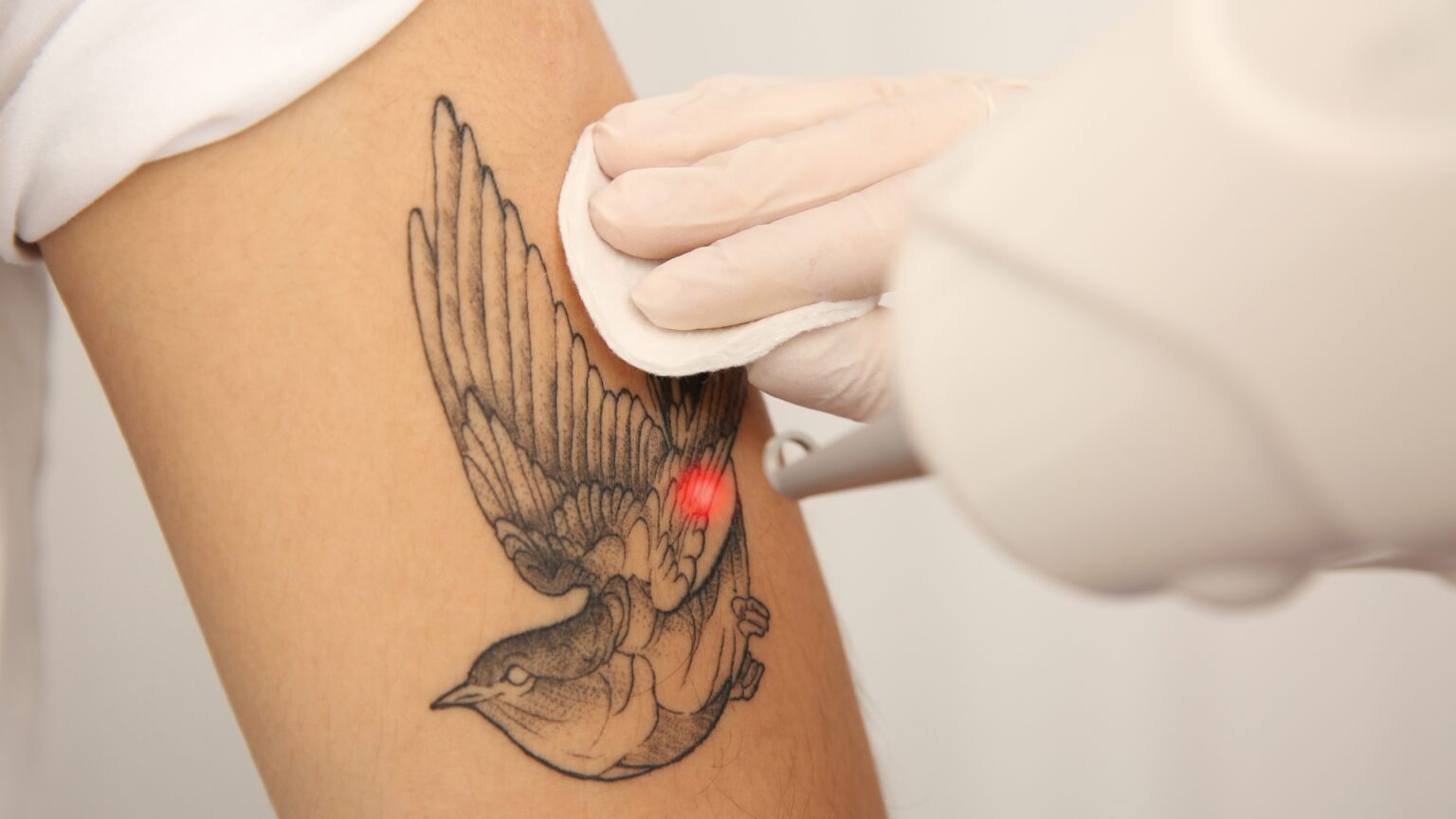
The Pico Laser Process
Pico laser tattoo removal fires pulses measured in picoseconds, which are trillionths of a second. For context, a nanosecond (the older standard) is a thousand times slower. That difference in pulse speed means ink particles are shattered more completely, not just cracked. Fewer intact particles left behind means fewer sessions overall, though it doesn't mean two or three visits will do the job.
Perth clinics now run several competing platforms. Absolute Cosmetic Medicine offers PicoWay (precision on darker pigments), PiQo4 (four wavelengths for dense, deep ink), and the Enlighten 3, a dual-mode system used at MIRA Clinic that switches between picosecond and nanosecond pulses depending on ink complexity. The Q-switched laser is still common and remains effective for straightforward black or dark blue tattoos on most skin types. What's striking here is that the right platform choice actually comes down to the tattoo's color profile, not the clinic's marketing preference.
Laser Tattoo Removal Perth: What Affects Your Results
Results vary considerably, and not all of it is within your control.
Ink color is the most significant variable most people don't ask about upfront. Black, dark brown, and dark blue inks respond predictably well. Multi-color tattoo removal is a different challenge entirely: colors like green, turquoise, light blue, and yellow absorb laser energy less efficiently, and some single-wavelength machines simply can't reach them properly. The wavelength breakdown matters: 1064nm handles dark pigment, 694nm targets blues and greens, and 532nm is the sole wavelength that addresses red ink. A clinic without that third option is going to struggle with your red roses.
Tattoo age is, counterintuitively, good news for older ink. Your immune system has been quietly chipping away at the pigment for years before you even book a consultation. A ten-year-old tattoo typically clears faster than fresh work. Professional tattoos sit deeper in the dermis and carry denser pigment than amateur pieces, which almost always means more sessions; this is one of the clearer patterns the data suggests across multiple clinic reports.
Top Clinics in Perth for Tattoo Removal
Perth has enough quality options that you don't need to settle for the cheapest booking you can find on a discount platform.
MIRA Clinic (West Perth and Joondalup) runs the Cutera Enlighten 3, a Class 4 picosecond laser with three wavelengths. Under WA law, Class 4 lasers can only be legally operated by qualified doctors or registered nurses in licensed facilities; this isn't a marketing claim, it's a legal requirement. MIRA publishes a pricing guide by tattoo size, which is more transparency than most clinics offer, and consultations can run at the same appointment as your first treatment if you're keen to start.
Absolute Cosmetic Medicine operates under AHPRA-registered medical supervision with Dr Glenn Murray as Medical Director (25-plus years in cosmetic medicine). They're one of the only Perth clinics running three separate pico platforms simultaneously, which means treatment selection is based on actual tattoo assessment rather than whatever one machine they happen to own.
Cleanskin Laser (St James) focuses exclusively on removal using PicoWay multi-pulse technology. With over 700 verified reviews and a reputation for clearly walking clients through each step, they're a strong option for first-timers who want to know exactly what they're getting into (and that's most people, honestly).
Dermedica (Scarborough), Ocean Cosmetics, MedAesthetics, and The Glasgow Skin Clinic round out Perth's well-regarded options. When comparing any clinic, confirm the specific laser model, who physically performs the treatment, and whether the facility holds a current WA Health Department laser licence.
Tattoo Removal Cost in Perth
Pricing is one area where the Perth market lacks consistency, so treat any number here as a starting point rather than a firm quote.
Size is the primary driver. MIRA Clinic starts at $160 per session for a very small tattoo (under 2cm x 2cm). Skin Resus lists entry-level pricing from $190, and Dermedica starts around $199 for small pieces. Larger, more saturated tattoos push into several hundred dollars per session; a full back piece at a medical clinic won't be cheap by any definition.
The total tattoo removal cost isn't one session, it's the per-session rate multiplied across your full treatment plan (typically 6 to 12 sessions, sometimes more). Some clinics offer multi-session packages at a modest discount for upfront commitment. Here's something that surprises people: in WA, Class 4 medical lasers cost upwards of $100,000 to purchase and can only legally be operated in medically supervised settings. That's a real structural reason why budget-priced providers can't always offer the same equipment or oversight, and why the cheapest option in the market isn't always the safest one.
Sessions, Pain, and Aftercare Tips
Most professional tattoos need 6 to 12 sessions, with 6 to 8 weeks between each. Amateur work often clears faster. Dense cover-ups or multi-layered ink can push past 12 sessions without much drama; it's not a failure, it's just physics.
Pain is honest but short. The standard description, a rubber band snapping against the skin, is accurate for most people, though it varies a lot by body location and individual pain tolerance. Sessions run between 10 and 30 minutes for an average tattoo. Clinics manage discomfort through topical numbing cream (applied an hour before), cold air Zimmer coolers, and in some facilities, local anaesthetic injections for more sensitive clients.
Aftercare is where people frequently undo good work. Follow these steps after every session:
- Keep the area clean and dry for up to two weeks.
- No direct sun on the treated skin; use high-SPF sunscreen once the skin has healed.
- Leave blisters and scabs alone. Picking is the fastest route to scarring.
- Skip hard exercise for 24 to 48 hours; sweating into a fresh treatment site isn't ideal.
- Apply a wound-healing balm or burns cream to the area a few times daily.
Redness, swelling, and mild blistering are standard for the first few days. Scarring risk stays low when aftercare is followed properly and the laser settings were dialled in correctly for your skin.
Ink Colors That Are Harder to Remove
Black ink is the benchmark; everything else is harder to varying degrees.
Dark blue and dark brown clear nearly as well as black on most platforms. The problem colors, green, turquoise, light blue, and yellow, are genuinely more resistant, and not because of some flaw in the process. These pigments sit at different depths and absorb light at wavelengths that standard single-mode machines simply don't cover. A clinic that only runs one wavelength may quote you a reasonable price per session, but they may also need twice as many sessions to address your teal ink. That math usually doesn't favor the cheaper option.
Picosecond technology has meaningfully improved outcomes for these stubborn shades, particularly on multi-color work. If your tattoo contains any green, turquoise, or yellow ink, ask your practitioner directly which wavelengths their system covers and what their actual results look like on those specific colors. This isn't an awkward question; it's the right one.
How to Choose a Perth Tattoo Removal Clinic
The operator and the equipment together determine your outcome. Price per session, on its own, tells you almost nothing useful.
A cheaper session with an underskilled operator on outdated kit can cause burns, patchy pigment breakdown, or permanent skin changes. Reddit threads from Perth residents have flagged specific clinics using machines not licensed for their intended use; it's not an abstract risk. Before committing, work through these questions:
- Is the person performing the treatment a registered nurse or doctor with laser credentials?
- Does the clinic hold a current WA Health Department laser licence?
- What laser model do they use, and is it a Class 4 medical device?
- Can they show before-and-afters of tattoos similar to yours in size and color?
- Do they have a written aftercare protocol, or do they just hand you a pamphlet on the way out?
A good clinic answers all of these without hesitation. If they deflect, that's your answer.
For more grooming and skin care guidance, visit hisgrooming.au.
What to Do Before Your First Session
A couple of weeks before your first appointment, stop tanning the area. Sun-damaged or recently tanned skin is harder to treat safely and may need the session to be postponed anyway. Come in with clean, bare skin: no moisturiser, oil, perfume, or anything else on the treatment zone.
If your clinic advises topical numbing cream, apply it around 60 minutes before and keep it covered with cling wrap so it doesn't evaporate. Most pharmacies stock it, or you can buy it directly from your clinic. One last thing worth saying plainly: manage your expectations before you start. Tattoo removal is a gradual process of dermal clearance across multiple appointments, not a same-day fix. Clients who go in understanding that typically get through the full treatment plan without frustration. Clients who expect dramatic change after two sessions often stop early and end up with a half-faded tattoo instead of a finished result.
Individual results vary. Always consult a qualified practitioner before beginning treatment. This article is for informational purposes only.


 Billy Joel D